(If you missed the introduction, you should start here.)
It was a brutally windy day. From the saddle, I could watch the fierce gusts rippling across the surface of the flooded rice paddies like ocean waves. My legs were sensing the incline, telling me that the vast flat plains around metropolitan Tokyo were finally coming to an end. Historically, this area was a strategic fortress town, guarding the “civilized” south from the “barbaric” north. Today, my mission was to cross the ancient border checkpoint and finally enter Michinoku, the North.
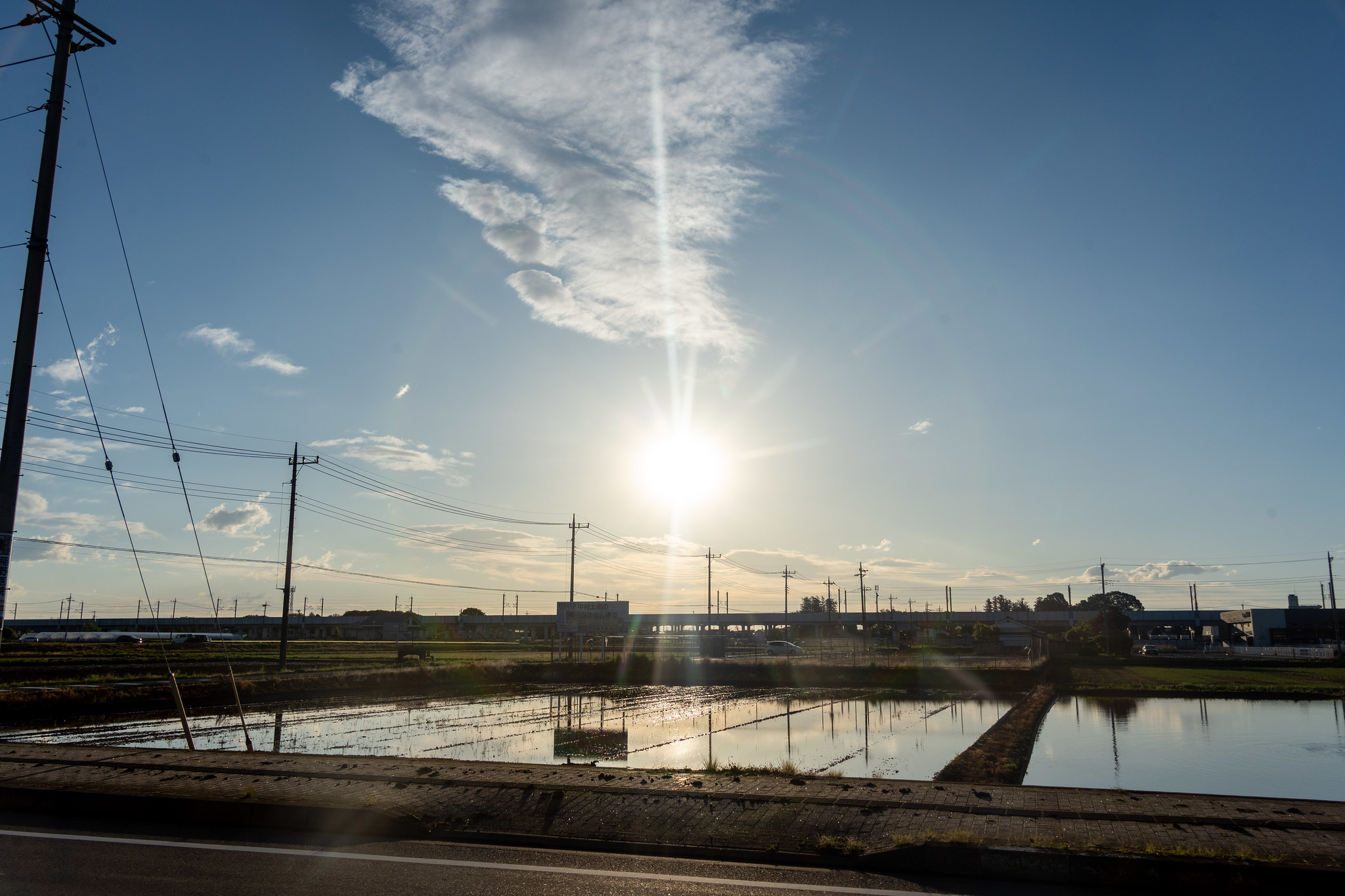
This part of rural Japan is incredibly peaceful, but it’s a quietness with two faces. I picked up a local community newsletter at a convenience store. It was filled with the mundane, earnest prose of grassroots democracy: a greeting from the second-term mayor, a report on a newly completed bypass road, and schedules for community weed-trimming. It’s comforting.
Yet, as I rode along the prefectural roads connecting these small settlements, the harsh reality of this rural peace became glaringly obvious. Many villages had mutated into ghost towns. I passed rows of abandoned shops. Inside their dusty glass display cases, old merchandise still sat on the shelves—completely bleached stark white by decades of relentless sun.
Riding a bike in Japan is uniquely frictionless, thanks to the miracle of convenience stores where you can hunt down everything from a quick calorie reload to an emergency phone charge. But if there is one thing I find utterly unforgivable about this country, it is that coffee shops refuse to open early in the morning. I rode past a beautiful roastery boasting “30 varieties of beans from around the world,” but the sign on the door read: Open from 11 AM. Come on now, a coffee shop that isn’t open in the morning is like a Santa Claus who refuses to wear red.
Shaking off my caffeine withdrawal, I stopped by a famous weeping willow alongside the old highway. This spot was immortalized in the 12th century by a legendary wandering poet-monk who abandoned his samurai status to live a life of aesthetic exile. Centuries later, even the great haiku master Basho would travel here just to stand in his footsteps.
From here, the old road began to climb alongside a river. It wasn’t a steep ascent, but the massive, stately gates of the traditional farmhouses along the route hinted at the wealth of the old feudal post town that once thrived here.
Eventually, the road veered away from the river, tackling a brief, sharp ravine before hitting a mountain pass. This was the exact line of the watershed, the prefectural border, and the true entrance to the North. I couldn’t help but marvel at how ancient humans painstakingly scouted these mountains to find the absolute lowest point to cross. It made me think of how ants build a trail. Ants do not systematically survey the terrain; rather, through a form of collective intelligence, their random movements naturally converge into the most efficient route. I bet human highways were born the exact same way.
Near the pass stood a tiny, ancient shrine. Legend has it that this remote sanctuary was visited by Japan’s most iconic tragic hero—a brilliant samurai general who had fallen out with his brother, the supreme Shogun. The young general fled north, crossing right through here to seek political asylum with the lord of the North. To put it in modern geopolitical terms, it would be like a US vice president defecting to China to seek political asylum. No wonder his brother eventually launched a total war to crush this northern domain.
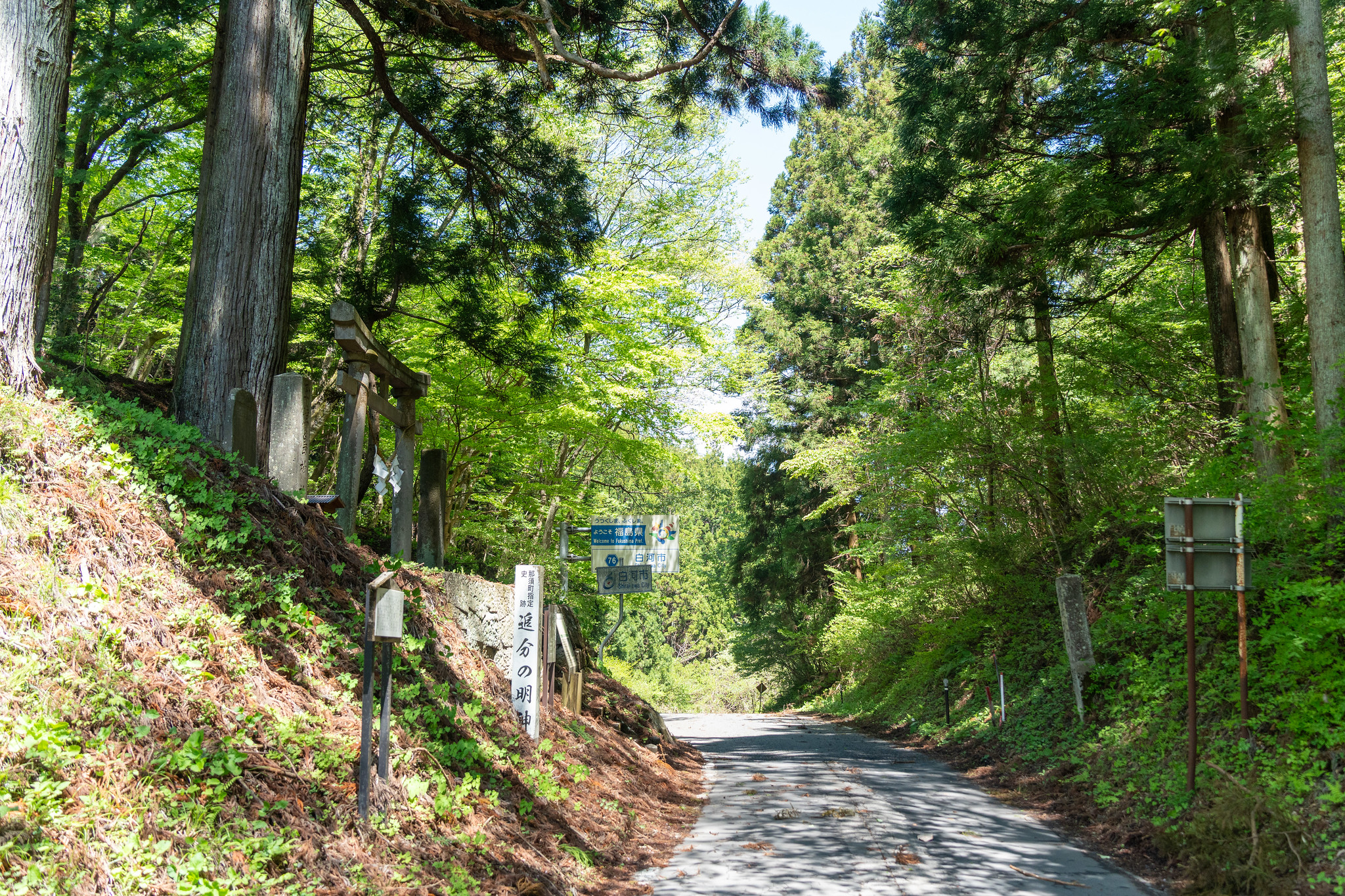
Just a short coast down from the pass brought me into a wooded glade. Hidden beneath a dense canopy of towering cedar trees, where the light was dim and the air was heavy with the scent of damp earth, lay the ancient ruins of the Border Checkpoint, a site that had made numerous appearances in poems and literature for a literal millenium, aside from being a critical military and cultural gateway.
The ground was littered with moss-covered stone monuments of all ages. Some signs explained how 18th-century scholars had excavated the site as an “ancient ruin.” It blew my mind: to us, the 18th century is ancient history, yet to them, this checkpoint was already a relic of a forgotten past. It’s like realizing that the pyramids were ancient history to the Romans, even though we think of the Romans as ancient. Standing there in the quiet gloom among those ancient stones, the sheer, staggering weight of time washed over me, leaving my mind completely serene.
Rolling further down the mountain, I arrived at the valley city. The train station was painted a crisp, brilliant white, giving it the vibe of a high-altitude summer resort. Nearby was a beautifully manicured lakeside park where I treated myself to a cup of green tea and a traditional wagashi pastry shaped like a wisteria flower. Bright green maple leaves framed the water—a preview of the fiery red show they would put on in autumn.
The park was built by a famous 18th-century reformist lord who is still clearly revered by the locals today. During a catastrophic nationwide famine, his brilliant administrative skills ensured that not a single soul in his domain starved to death. Impressed by his local success, the Shogunate promoted him to the central government to fix the entire country’s economy. He failed miserably, though. Running a small, tight-knit domain must have been fundamentally different from steering a massive, bloated empire. As a guy who just enjoyed the agile intimacy of a small company over massive corporate structures, I felt a deep, personal sympathy for his plight. He probably had a lot more fun when he was just running his own little fiefdom.
North of the city, the terrain turned into a rhythmic rollercoaster of ridges and valleys. The lowlands were meticulously carved into rice fields, but the moment the road scaled a ridge, I was in dense forest. The road eventually descended, then, as I picked up speed, the trees would abruptly vanish, the horizon would burst open, and another vast expanse of farmland would greet me. The sudden shifts in speed, the satisfying burn of the short climbs, the dramatic reveals of the landscape, and the sweet, gentle fragrance of mustard flowers washing over me in the breeze—it was pure cycling euphoria.
Just before reaching my destination for the night, I spotted a roadside natural hot spring (onsen) and slammed on the brakes. Sweating and exhausted after hours of motion, inserting a sudden pocket of absolute stillness into the day is pure bliss for the soul. Soaking in the steaming water, I felt a profound reconnection with my own cultural roots. Even though my schedule was tight and the sun was setting, I felt proud of my ability to just slow down, let go of the clock, and exist completely in the moment.
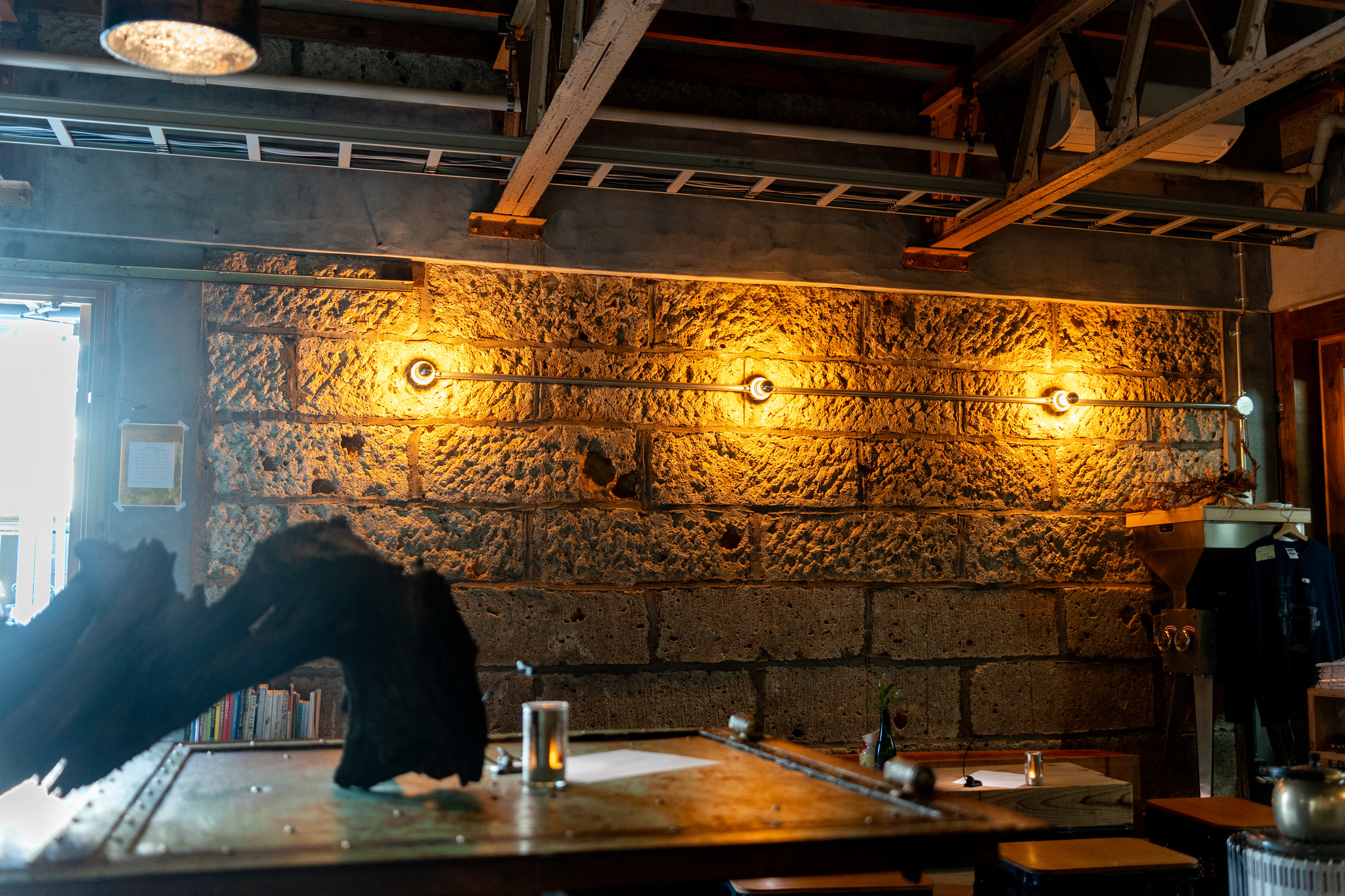
In the city, I reunited with a former teammate from my previous company. He treated me to a hidden gem of a craft beer bar housed inside a beautifully renovated, dimly lit stone warehouse—the perfect venue for the end of a long day.
For dinner, he took me to a cozy local tavern. I wanted to pair the meal with a local sake made from the very rice fields I had been riding past all day. When I asked, I discovered the menu only served local sake. But what amazed me was the resolution of the menu; the sake wasn’t categorized broadly by the prefecture (after all, everything was from Fukushima), but explicitly by the specific sub-regions. After inhaling an obscene amount of white rice and chatting with a friendly family at the next table, I walked back to my hotel under the cool night air, pushing my bike alongside me.
Exercise until your muscles burn, voraciously take in the world around you, eat like a horse, and sleep like a log. The true joys of human life are remarkably simple.