(If you missed the introduction, you should start here.)
Leaving a budget beef-bowl diner packed with exhausted young people who looked like they had pulled an all-nighter, I began pedaling north alongside the great river. My journey through Michinoku, the North, has always been tethered to water. I’ve heard that back in the feudal era, massive engineering projects permanently fixed this river’s path to this particular mountain-bound route. These monumental public works are what transformed the vast plains into a fertile, powerhouse rice-producing region. How on earth did they pull off such massive earth-moving projects in an era without mechanical engines? If I researched the mechanics behind it, I’m certain it would be a fascinating rabbit hole.
Regardless of the past, right now, this place is completely devoid of human presence. The only sounds are the gentle chirping of birds and the occasional splash of a fish breaking the water’s surface. It is a quiet, sacred early morning hour. The blue sky feels endlessly massive today. It’s an absolute perfect day for a bicycle ride.
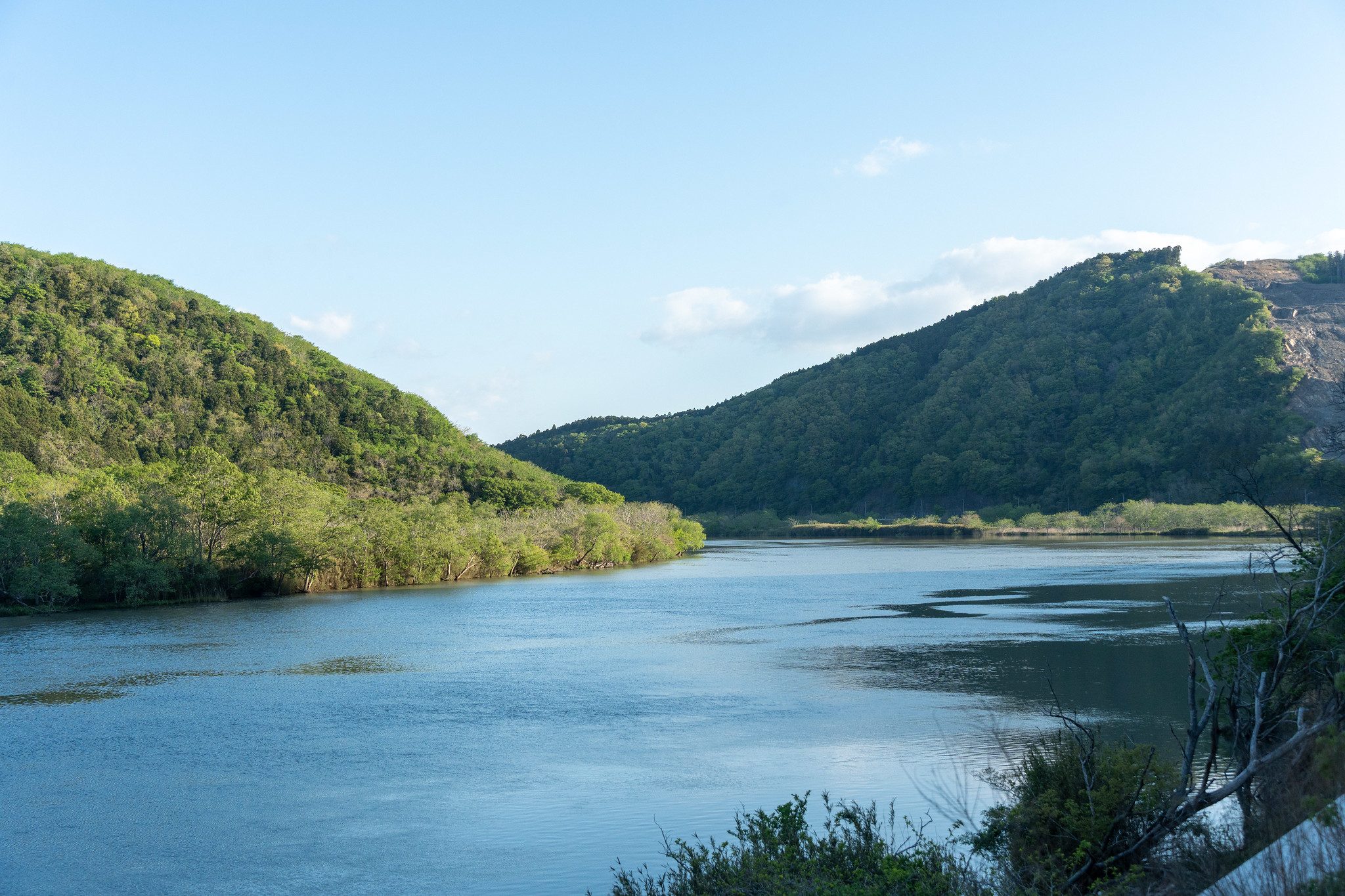
I drifted past tiny rural settlements, one after another. An empty local bus overtook me on its first run of the day.
At this point, the road finally severed ties with the river and veered inland. The GPS screen delivered a brutal instruction: Go straight along this road for the next 40 kilometers. What is it about that specific notification on a cycle computer that induces such a profound sense of despair? To make matters worse, a dull ache had flared up in my left thigh, my saddle placement felt painful, and even a gentle, rolling hill—the kind I would normally attack and crush with a burst of speed—became a grueling, slow-motion struggle. This stretch was the mental and physical low point of the day.
Desperate for a break, I collapsed onto a bench inside a tiny roadside bus shelter to eat an onigiri. Having spent days entirely exposed to the vastness, this small, basic structure enclosed by three walls provided a bizarrely comforting, deeply peaceful sanctuary.
Reaching a sleepy town, I intentionally deviated from the main bypass to trace a historic old highway cutting through the town center. The narrow road cranked sharply at two consecutive right angles—a classic defensive urban layout characteristic of ancient samurai-era post towns. Just a stone’s throw from the local station, I spotted a tiny traditional sweet shop. Looking to recharge, I stepped inside and called out, prompting a kind older woman to emerge from the back kitchen.
When I selected a pastry and mentioned I’d like to eat it on the spot, she went out of her way to brew a fresh cup of green tea for me. When she discovered I had ridden all the way from Yokohama on a bicycle, she let out a volley of gasps and genuine surprise. And when I casually added that I actually live in the United States, her bewilderment completely broke the scale.
It reminded me that connecting with someone entirely outside your daily sphere of reality is a universally joyful experience. In retrospect, her genuine, enthusiastic curiosity made me open up and chatter away. Being a master listener who makes the speaker feel incredibly interesting is a truly beautiful talent. She even stepped outside to admire my road bike. The way her speech would occasionally slip into the rich, warm local dialect was absolutely charming.

The next stretch brought the steepest climb of the day. Objectively, it was a rather modest hill—a mere 80 meters of elevation gain. But with the looming anxiety over my compromised left thigh, I approached it with the sheer mental grit and trepidation usually reserved for an 800-meter alpine peak.
Yet, perhaps thanks to the restorative magic of that sweet shop pitstop, I scaled it with surprising ease. It made me realize that this is exactly how human beings build self-confidence: by steadily overcoming small adversities, one by one. I chose not to fight the wind or the incline. I completely forgot about my speedometer, locked into a steady, unyielding cadence, and kept the load on my legs perfectly constant. Even when the conditions turn hostile, if you stubbornly protect your own pace, you can weather any storm. Resilience is a profound form of strength. There is so much that sports can teach us about life.
Glancing up, I noticed the logo on the bus stop signs had seamlessly changed again, indicating I had officially crossed the administrative border into the next prefecture. Just days ago, I was navigating the transit lines of a completely different region!
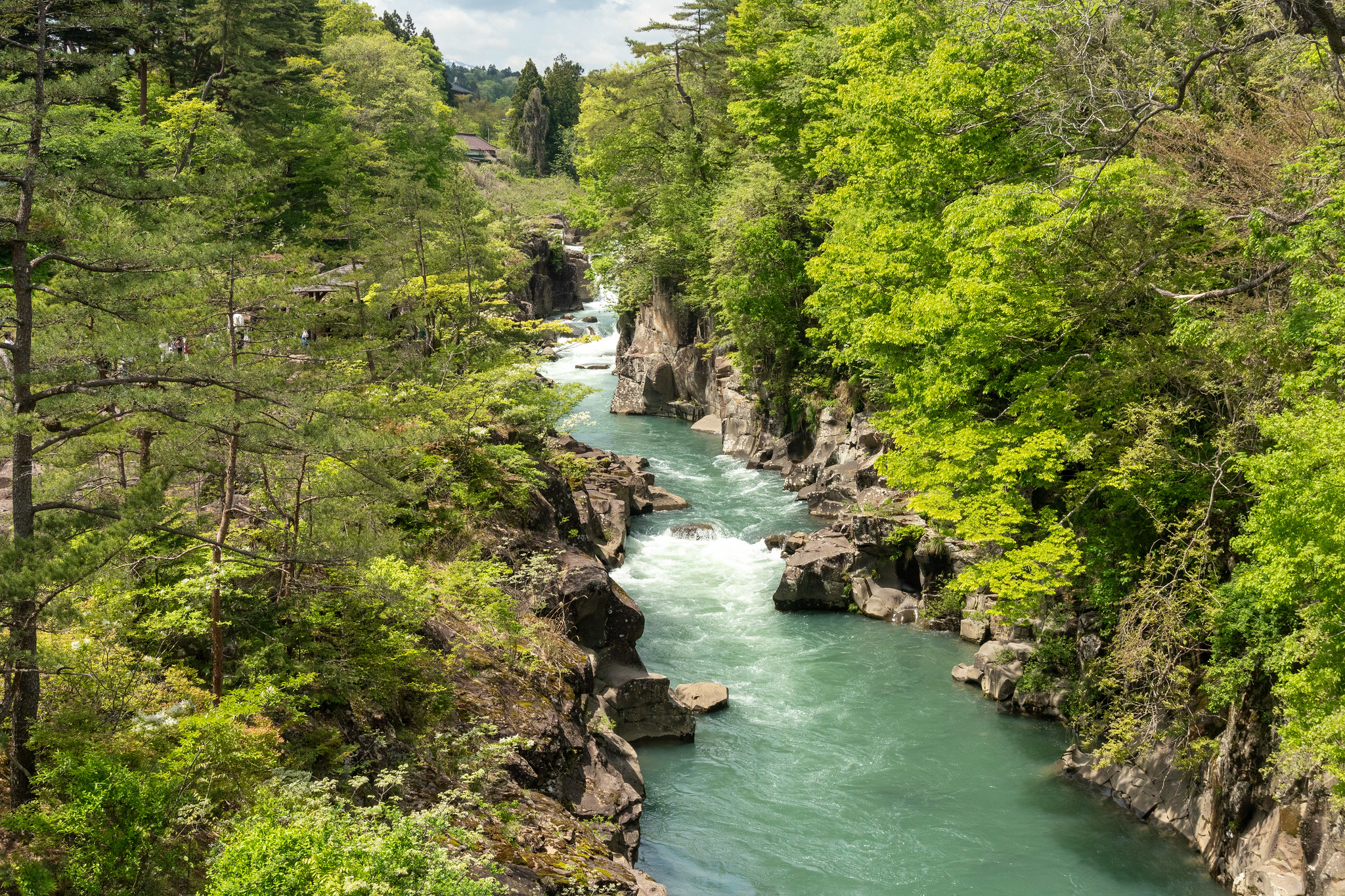
Since I was ahead of schedule—and with my spirits thoroughly recharged—I decided to take an impromptu detour. I turned west and climbed about 7 kilometers up into the hills to visit a famous scenic gorge. It was a surreal, jarring landscape: right in the middle of a completely ordinary, quiet town, a raw torrent of ethereal, mountain-fresh water surged through a jagged chasm. The water was a milky, swirling cerulean blue, kicking up dramatic white spray as it hammered against the steep rock formations. Microscopic rock dust ground down by the glacial currents likely creates this surreal hue, but the sheer vividness of the color was astounding. The stark contrast against the dark, weathered rock face was breathtaking.
Doubling back from the gorge, I finally rolled into the official climax of this entire journey: the historic valley of Hiraizumi. My first stop was a magnificent World Heritage temple complex, which the ancient northern lords had painstakingly engineered to be a physical, earthly manifestation of the Buddhist Pure Land—a literal paradise on earth. Today, only the stone foundations and the sweeping lines of a massive sacred pond remain, the grand wooden halls long since lost to history.
Standing there, living nearly a millennium into their future, the landscape felt less like a paradise and more like a profound monument to the fleeting, fragile nature of human ambition.
It made me wonder: will the glittering metropolises of our modern era—places like Dubai, which boast of unprecedented wealth and luxury—end up as nothing more than barren archaeological ruins a millennium from now, evoking a similar sense of melancholic transience in future travelers? Perhaps abandoned due to the ravages of climate change, or hollowed out by conflict. My imagination ran wild.
The northern lords had a grand, visionary ideal: to heal a nation devastated by civil war and offer universal salvation to all living souls through the power of Buddhist philosophy. There is a deep, striking irony in the fact that their utter destruction by the central government is precisely what rendered their grand ideal immortal. I wonder if Dubai collapses into dust, will it leave behind any immortal spiritual ideal that transcends its physical structures? To be completely honest, I felt absolutely no such spirituality when I visited that city.
And then, I stepped inside the fabled Golden Hall. The structure itself is remarkably compact, but that miniature scale is precisely what concentrates its overwhelming power. Clad entirely in shimmering gold leaf, inlaid with iridescent mother-of-pearl that glows with the colors of the rainbow, and packed with intricate statues and delicate carvings, it stands as an undeniable, jaw-dropping testament to the absolute apex of northern civilization’s golden age. Its compact, meticulous craftsmanship allows you to absorb the raw gravity of that wealth with a single gaze.
Today, we view the Golden Hall through the clean, detached lens of art history or tourism. But in an era when spiritual and esoteric forces were believed to be as real as gravity, this temple was undeniably a critical piece of national infrastructure. It was a massive defensive investment designed to shield the kingdom from pestilence, famine, and drought. I quietly wandered through the sacred grounds, deeply moved by the weight of their prayers.
Perhaps the long walk through the temple grounds served as a makeshift physical therapy, because when I climbed back into the saddle, the persistent ache in my left thigh had completely vanished. From there, I locked into a final 15-kilometer sprint toward the bullet train station. As the afternoon waned, the shadows began to stretch long across the tarmac, bringing that classic, bittersweet melancholy that always accompanies the final hours of a magnificent journey. It felt like the quiet, familiar wind-down of a Sunday evening.
The final exclamation mark of this trip was delivered by a tiny craft brewery in a nearby town. Stepping inside, I found an incredibly avant-garde, deeply personal space helmed by an owner who looked and carried himself exactly like a legendary Japanese punk rock icon. You simply cannot manifest a space this unique unless you are ruthlessly pursuing your own unfiltered aesthetic. He was precisely my favorite kind of creator, running my absolute favorite kind of shop. Unfortunately, they didn’t offer on-site pours. I happily bought a few cans, packed them securely into my gear, and made tracks for the station.
The bullet train station was a lonely, quiet concrete island built out in the middle of nowhere, completely disconnected from the local commuter train lines, typical of rural bullet train stations. There, I poured myself a modest celebratory drink, dismantled my bicycle, packed it carefully into its travel bag, and waited for the train. It was that sublime, meditative state of absolute bliss that only arrives after a massive physical ordeal—a moment where the mind completely empties itself of noise. The setting sun flooded the quiet station with a warm, golden light, casting a beautifully melancholic shroud that served as the absolute perfect curtain-call for this trip.
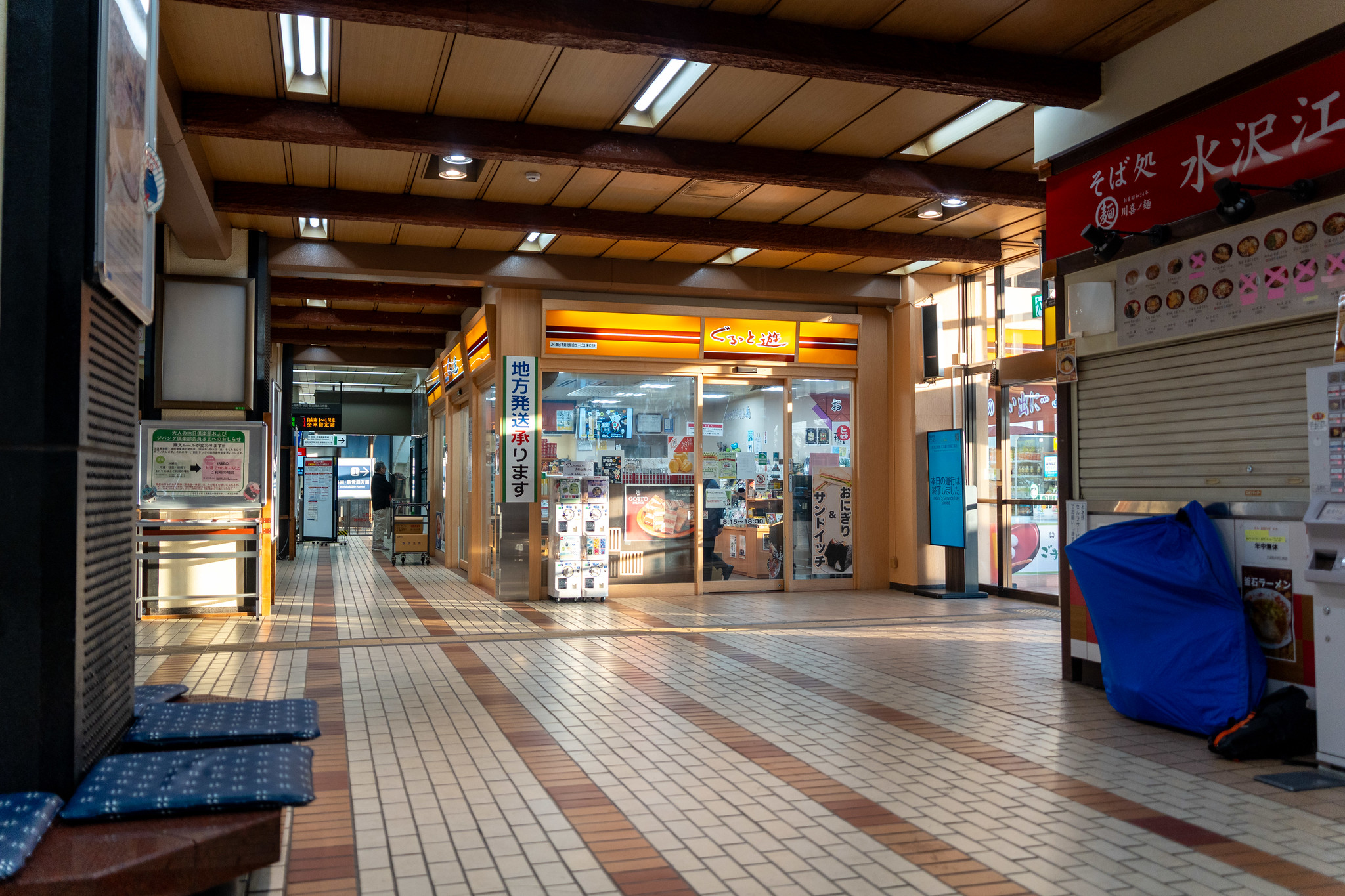
Boarding the bullet train back toward Tokyo, the high-speed rail began rewinding a full day’s worth of grueling cycling progress every 30 minutes. My only regret was that the pitch-black darkness outside completely swallowed the view. Right now, every single town flashing past the window possessed its own story and a piece of my affection. The roads I had suffered through, the hills I had climbed—I desperately wanted to look out at them, honoring them one last time on my way home.
And just like that, my five-day, 670-kilometer journey through the historic heart of Michinoku came to a close.