(If you missed the introduction, you should start here.)
This morning, my journey resumed along the same river. While the western bank of the river is bustling with a major national highway, the eastern side is narrow, isolated, and rather serene. Endless rows of rice paddies clung to the tight strips of land. In the early morning mist, there wasn’t a soul in sight; there was only the rich scent of the soil and the steady chorus of frogs. It gave me a profound, firsthand taste of what it truly feels like to live in a rural farming village.
Just before reaching the coastal plains, I crossed the river one last time. When I first encountered this river at the mountain pass on Day 2, it was just a tiny, humble stream. Down here, near its mouth, it had transformed into a sweeping, majestic body of water flowing with immense authority. From the ancient pass all the way to this coast, every single inch of habitable flat land in this region was carved out and created by this very river. As I rode away from it, I felt a strange pang of sadness, as if I were parting ways with a close friend who had journeyed alongside me for miles.
Ahead of me lay the vast coastal plains. Coming straight out of the tight mountain valleys, the sheer scale and openness of the flat horizon felt incredibly refreshing. Rice paddies stretched out as far as the eye could see. The road cut through the fields in a perfectly straight line, and I just locked into my rhythm and flew.
I took a brief detour to hunt down some breakfast and crossed a railway crossing on the main northern train line. Glancing at the mile marker, I noticed it read 340km. It dawned on me that I had been traveling alongside this railway backbone for days now. I had truly come a staggering distance on my own two legs. These two tracks connect that vast distance and more. Wow.
Next, I crossed the second river responsible for creating these vast plains. Rising up directly across the water was the skyline of a major metropolis—the first massive city I had seen in days. Looking down, the vibrant, glowing green of the fields met the infinite blue sky. The sudden, overwhelming beauty of the landscape caught me completely off guard; it was so breathtaking I literally gasped. Right at that exact moment, a Shinkansen bullet train screamed across the iron bridge right next to me. Its brilliant emerald-green body with a sharp accent ribbon of pink flashed in the morning sun. It was a stunning color palette that perfectly matched the natural aesthetic of the North.
Passing the headquarters of a prominent regional bank, my mind drifted back to the wealthy landowners and merchants I had learned about yesterday. Back in the feudal era, the legendary warlord built massive flood control systems here to elevate the living standards of the entire region. It wasn’t about self-interest; it was a public works project designed to improve collective society. In the 19th century, that exact same public-spirited role must have been held by regional banks. To fuel industrial evolution, communities desperately needed local financial infrastructure—a mechanism to gather capital and invest in factories, machinery, and facilities for the common good.
It struck me then that the world of open-source software—including Jenkins, which I spent so much of my life building—is essentially the modern equivalent of these historic public works. It is the invisible, foundational infrastructure that quietly supports the entire digital world. Thinking about it in that light gave me a quiet swell of pride.
Perhaps it was this sense of “ascending” toward the great northern capital that was making me feel so exhilarated. Or maybe I was just relieved to be back on roads I recognized. As the morning progressed, the city woke up, and the streets began to hum with life. Towering arches of lush green trees lined the massive avenues, perfectly living up to the city’s nickname: The Capital of Leaves.
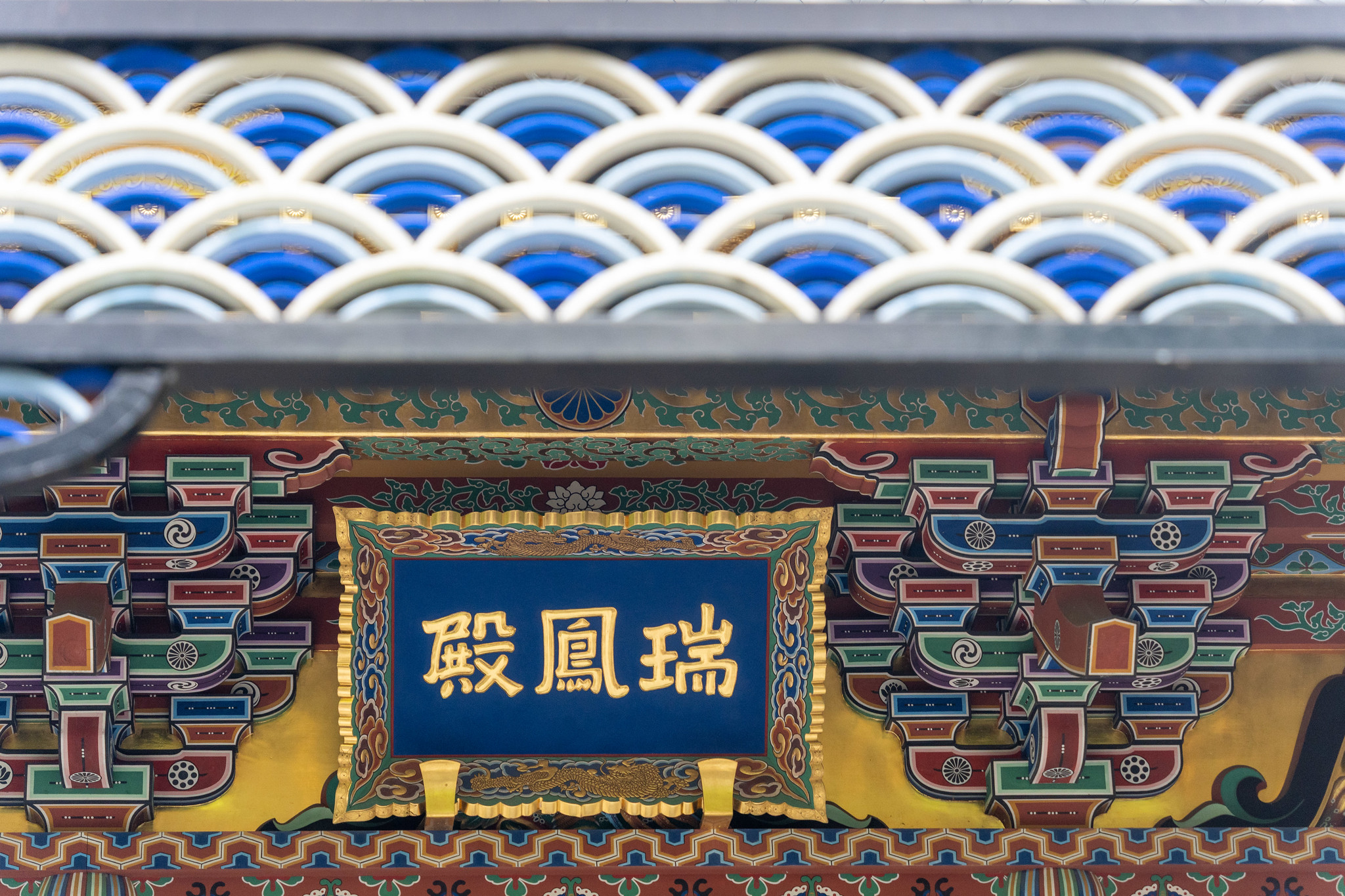
My first destination in the city was the breathtaking mausoleum of the city’s founding warlord. The complex is a masterclass in feudal high fashion—gorgeous, vivid structures clad in jet black and brilliant gold. It contrasted spectacularly against the deep green foliage that had just been washed clean by a morning shower.
Ironically, what hit me the hardest wasn’t the architecture itself, but the brilliant camera work of a promotional video playing inside a tiny museum adjacent to the shrine. The filmmaker had captured the essence of the mausoleum’s beauty with such profound mastery that it made me look down at my own photos with utter embarrassment. My shots felt incredibly generic and uninspired—nothing more than glorified “I was here” alibi photos taken on a smartphone. It was a humbling reminder of what true professional craftsmanship looks like: the ability to extract the raw beauty of a subject and completely captivate the viewer’s gaze.
Next, I climbed up toward the old castle ruins, winding my way up the mountain through a local university campus. Countless tiny, delicate white petals were raining down from the canopy, creating an incredibly ethereal atmosphere. True to the name of this mountain, the fresh summer foliage was stunning. Right as I was riding through, the clouds suddenly parted, and brilliant sunlight flooded the sky. I coasted through a glowing tunnel of radiant green leaves. Early summer is, hands down, the absolute best time to experience this city.
Reaching the summit, I rolled onto the castle grounds. Having visited this spot a few times before, I felt right at home. The iconic bronze statue of the founding warlord on horseback gleamed fiercely in the bright sunlight. Built as a strategic military fortress, the hilltop offers an unparalleled panoramic view of the entire landscape. In an era before skyscrapers, you could undoubtedly see all the way to the Pacific Ocean. Standing there, I let my mind wander, visualizing the exact view the old samurai lords must have looked out upon.
As I was navigating the outer suburbs, a road sign in an ancient town caught my eye, pointing toward a regional history museum. Having studied northern history to prepare for this trip, I couldn’t resist a spontaneous detour.
Inside, they had displayed a massive, authentic flag from the 19th-century Northern Alliance. It sent a chill down my spine to realize that if history had shifted just a few feet in a different direction, the North could have broken away to become an entirely independent nation. This region’s history is absolutely riddled with these “almost a separate country” crossroads.
The exact same thing happened back in the 8th century, too. Back then, the North was entirely outside the control of the Emperor and the imperial court—a wild land ruled by independent native clans. This very town served as the outermost military fortress for the Kyoto government.
It was right here that a legendary clash of titans went down between the iconic native tribal leader, Aterui, and the imperial government’s supreme military commander. It was reminiscent of Julius Caesar and the Gallic Wars.
The ancient tribal leaders, the medieval independent lords, the stylish samurai warlords, the 19th-century Northern Alliance—they were all so beautifully, tragically stubborn. They were always the remote frontier destined to be crushed by the central government. And while they eventually came to enjoy the economic prosperity of a unified Japan, you can still feel the lingering, quiet sorrow of losing their self-determination. Throughout history, the people of the North have always chosen honor over pragmatism. On this journey, I am firmly on their side.
While the museum lobby was packed with families visiting a pop-culture manga exhibition, I stood there entirely out of place, completely lost in thought over ancient battles and the bittersweet history of northern subjugation before quietly slipping back outside.
The road leading toward the coast was locked in a brutal gridlock of tourists traveling for the spring holidays. On a bicycle, I could easily filter past the endless line of slow-moving cars, which made me feel incredibly smug. On the flip side, riding inches away from heavy traffic requires intense concentration, leaving little mental bandwidth to enjoy the scenery.
To escape the stress, I veered off the national highway and took a labyrinth of narrow backroads that traced the deeply jagged, intricate coastline that the region is famous for. Since regular tourists never take these routes, the chaotic roar of traffic vanished instantly, replaced by a profound, breathtaking silence. Fresh spring leaves swayed gently in the breeze. Suddenly, the magnificent, iconic view of the bay burst open below me—shimmering blue waters dotted with pine-covered islets, and a brilliant white ferry gliding silently across the sea. You don’t have to be a legendary haiku master to find your breath completely stolen by this sight. This joy of the detour is a reward exclusive to cyclists.
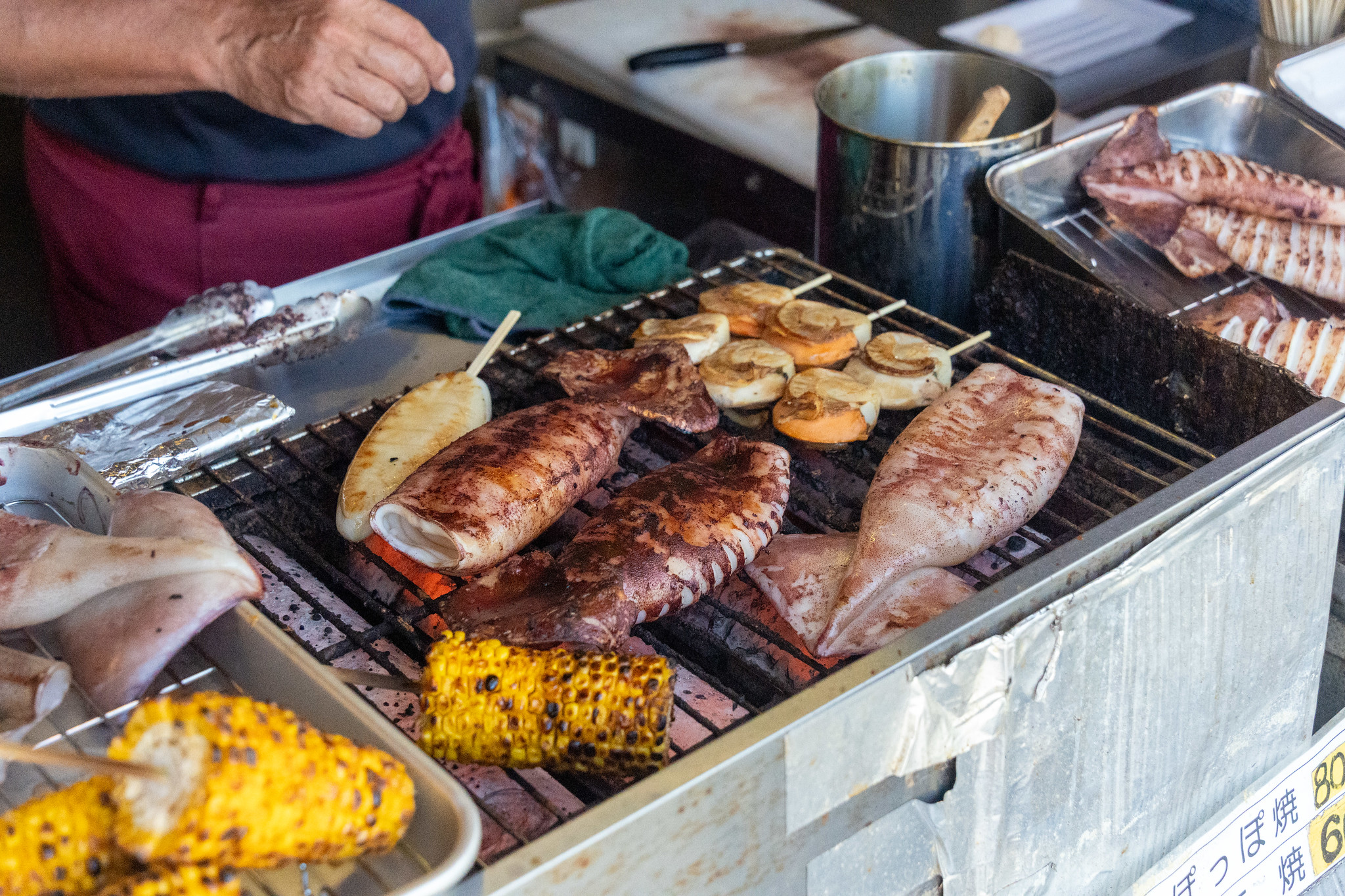
The tourist hub where the ferries dock was a complete madhouse of packed crowds. Since I had already done the proper sightseeing on previous trips, I decided to focus entirely on a solo food tour. I hopped from one local shop to another, inhaling traditional grilled fish cakes at one stop and downing fresh raw oysters at the next, eating my way through the town, determined not to miss anything.
Deep in the outer bay area, right in the middle of a steep descent, my eyes caught a banner for a natural hot spring at a coastal hotel. I slammed on the brakes! Soaking in the completely empty bath, I gazed up through the window at the bright blue sky and watched the maple leaves rustle in the wind. Such a peaceful, ordinary moment.
But then, my mind drifted to the catastrophic 2011 earthquake and tsunami. Right here, so many ordinary lives were abruptly, brutally snuffed out in a matter of minutes. The terrifying fragility of human existence hit me like a physical blow. A heavy tightness gripped my chest, and I felt an overwhelming urge to just break down and cry.
What saved me from that dark spiral was a tiny bird’s nest tucked into a tree branch right outside the glass. It was a simple, quiet testament to the resilience of life—a delicate, flexible strength enduring in the face of a mercilessly indifferent nature. My heart slowly found its peace again. Spotting a selection of local craft beers in the hotel lobby, I fought off a massive urge to crack one open and pushed onward toward the port city of Ishinomaki.
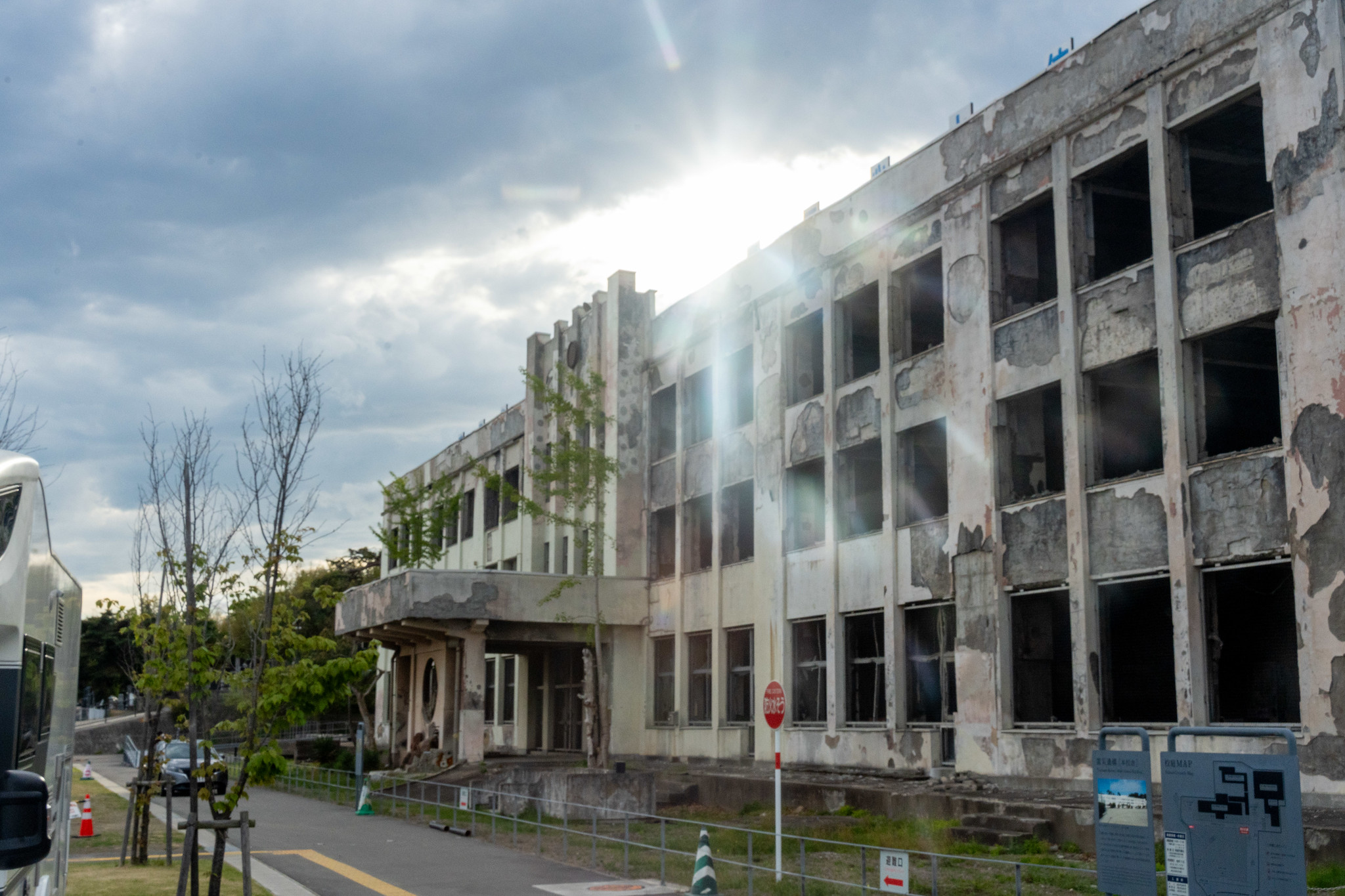
In Ishinomaki, the tsunami had completely erased an entire urban neighborhood from the map. Rather than attempting to rebuild the residential grid, the community had chosen to transform the entire barren footprint into a massive memorial park. I suspect too many people who were impacted decided to leave, and there was no point in “rebuilding”. In the center sat a pristine, modern memorial museum, preserving the raw memories of that fateful day. It was drawing an incredibly large crowd of visitors. Directly across from the park, an elementary school that had been completely gutted by the waves was preserved exactly as it was—a raw, powerful, haunting monument to the disaster.
Inside the museum, a guide explained that the ceiling height of the building was engineered to match the exact height of the tsunami wave that hit this spot. It was roughly 7 meters tall. Looking up at it, the sheer scale left me completely speechless. It is the kind of terrifying height that words utterly fail to convey.
Along the harbor, the top of a massive new water-pumping facility had been converted into an elevated tsunami evacuation shelter, stamped with a large green icon of a person running up stairs away from a wave. Every structure was built with heavy, monolithic reinforcement. Even the elevated highway I had taken into town sat on a massive, unnaturally high wall of earth—clearly engineered to act as a colossal seawall. Feeling the staggering depth of grief that drove this city to build such titanic defenses left my spirit heavy.
Seeking a bit of comfort, I rolled into a local diner for Dinner #1. After checking into my hotel, I went out and grabbed a hot bowl of ramen for Dinner #2. And right now, I am sitting at a conveyor-belt sushi joint, eagerly waiting for Dinner #3 to arrive. My cycling appetite is completely out of control, but when the local food is this spectacular, you just can’t stop.
Outside, a ferocious gale is howling against the windows. I really hope the wind calms down by tomorrow morning.